
Ninja Turtles: Legends
Ludia Games Inc.Role Playing
4.525.16K Reviews
- Version
- 1.29.7
- Installs
- 50.00M
- Age Rating
- Teen
Screenshots
Our Review of Ninja Turtles: Legends
 Analysis by Appyee
I spent time with Ninja Turtles: Legends as a shared-device game, and that perspective changed what stood out to me. It is easy to imagine one person starting a session and another family member picking up the phone later, but the game works best when everyone understands that progress, purchases, and play time belong to the person using the game profile at that moment. That sounds obvious, yet it matters more here than it does with a simple puzzle game because this is a character-collection role-playing game built around gradual progress.
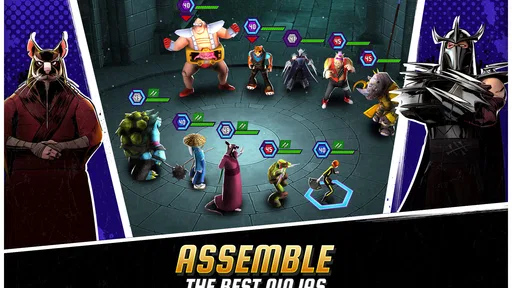
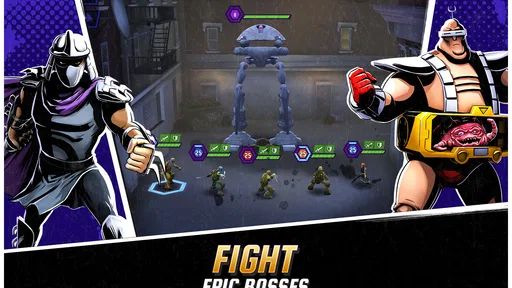
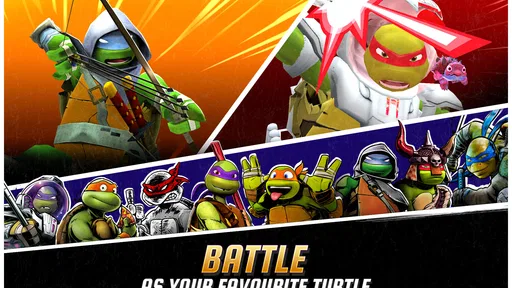
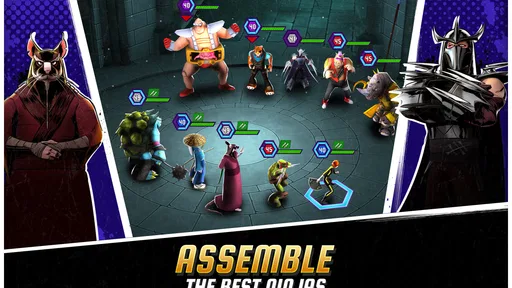
The basic appeal is clear: I get to guide Leonardo through battles connected to the Teenage Mutant Ninja Turtles universe while building a team of familiar mutants. The central story goal involves taking on the Kraang and trying to rescue Leonardo’s brothers and fellow mutants. I found that premise more useful as a reason to keep moving through the campaign than as a deep narrative experience. The real attraction is assembling a stronger group, choosing who fights, and deciding how to spend the resources earned along the way.
That makes it a good fit for someone who likes short, repeatable battles and steady character development rather than a long console-style adventure. It is free to start, although optional purchases range from $0.99 to $99.99 per item. I would be comfortable recommending it to a fan who enjoys collecting and upgrading, but I would not hand it to a younger player on a shared phone without first agreeing on clear household rules.
How Ninja Turtles: Legends fits into a shared household
I look at a shared-device setup as more than a question of who gets the next turn: it is also about agreeing how one person’s choices affect the next session. I’d make the game profile’s owner and the purchase rule clear before passing the phone around. That gives us a useful starting point for considering which household routines make this kind of ongoing team game easier to share.
A practical game for passing around, with one important catch
In my experience, the game is easy to use in small bursts. A person can play a few battles while waiting, then put the phone down without needing a long uninterrupted session. That makes it suitable for a household where the device moves between people during the day. One player might handle the story battles, while another enjoys improving the roster or examining which team members are worth investing in.
The catch is that this is not really a turn-taking board game. The game does not become a neutral family activity simply because several people use the same phone. Whoever is playing is making decisions for the active game profile, and those decisions can affect future battles. If one person spends valuable resources, changes the team, or uses a purchase, another person may inherit the consequences. I recommend treating the profile as belonging to one clearly identified player, even when the hardware is shared.
A realistic example would be a parent leaving the phone available after dinner while a child plays several stages. The child may make progress quickly, but the parent could later discover that the usual team has been changed or that resources were used on a character they did not plan to develop. Nothing about that scenario requires bad intent. It is simply the result of a progression game being used like a communal app. A short conversation before play prevents most of the frustration: decide who owns the save, who may change the roster, and whether purchases are allowed at all.
Why the roster encourages personal ownership
The team-building layer gives the game a personal feel. I did not approach each character as a disposable battle piece. Once I had started thinking about which fighters deserved attention, the roster became a record of my choices. That is enjoyable when one person is in charge, but confusing when several people are making upgrades according to different priorities.
My advice is to create a simple household convention: one player chooses the main team, while other users may play only with that team unless they have permission to make changes. This preserves the shared-device convenience without turning every session into a negotiation. It also helps a younger player learn that unlocking a character is not the same as immediately spending every available resource on that character.
For families who want a game everyone can freely alter, a cooperative title or a low-stakes puzzle game may be a better choice. Ninja Turtles: Legends is more rewarding when decisions accumulate over time. That long-term structure is one of its strengths for a dedicated player and one of its weaknesses as a completely open family game.
Setup boundaries matter more than the first battle
The first session is likely to feel straightforward because the theme does much of the work. The familiar characters make the opening easy to understand, and the objective gives the player a reason to continue. Still, I would spend a few minutes setting boundaries before allowing unsupervised play on a shared device.
First, I would identify the active profile and explain that progress should not be reset or altered casually. Second, I would decide whether the game is allowed during homework, meals, or bedtime. Third, I would make the purchase rule explicit. Since the game includes optional items with a wide price range, “free to download” should never be treated as “there is no spending risk.” A household rule such as “no purchase without asking” is clearer than relying on a child to understand the difference between in-game currency and real money.
I also recommend agreeing on a stopping point. A player who is focused on completing one more battle can easily turn a short break into a longer session, especially when progress is being made. The game is better enjoyed when it remains a planned activity rather than becoming the default response to boredom. This is not a criticism unique to this title, but its collection and upgrade loop makes the temptation particularly noticeable.
Keep coordination simple and visible
Coordination works best when it is specific. Instead of saying “be careful,” I would use rules such as “do not spend upgrade materials without checking” and “leave the active team unchanged unless the owner agrees.” Those instructions are easy for a child to follow and easy for another adult to verify later.
A useful routine is to end each session by looking at the current team together. That takes only a moment, but it prevents the next player from wondering whether a different lineup was selected accidentally. It also turns the game into a small planning exercise: which characters are being developed, what kind of challenge caused trouble, and whether the next session should focus on story progress or preparation?
This is where I think the game can work surprisingly well between an adult and an older child. The adult does not need to play every battle. They can help with resource decisions, while the child handles the action and learns from the results. That arrangement preserves the child’s sense of ownership without leaving every spending decision to impulse.
Age context and trust
The game carries a Teen content rating, so I would not treat it as an automatic choice for very young children simply because the characters are cartoon heroes. The rating is a useful reminder that parents should look at the actual experience and decide whether the tone, battles, and purchase structure fit the child. Familiar branding is not a substitute for supervision.
For a teenager or a trusted older child, the game can be a reasonable personal pastime. I would still explain that character collecting can make virtual rewards feel urgent, even when waiting and playing normally is perfectly acceptable. The most important lesson is not “never spend”; it is understanding that optional purchases are real financial decisions and that progress should not be measured by how quickly everything is unlocked.
On a shared family phone, I would be especially careful about trust boundaries. The safest arrangement is simple: the player knows what they are allowed to change, the adult knows how purchases are handled, and everyone understands that the game profile is not a place to experiment freely. If those expectations cannot be maintained, I would choose a game with less persistent progression.
What the role-playing structure feels like in practice
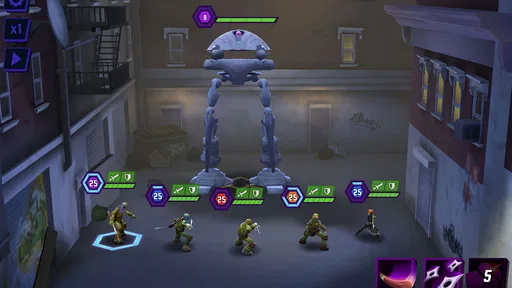
As a role-playing game, Ninja Turtles: Legends is less about direct movement through a large world and more about making a sequence of team decisions around battles. The satisfaction comes from seeing a chosen group become more capable and from adjusting your approach when a stage exposes a weakness. I enjoyed that rhythm because it gives even short sessions a clear purpose.
The useful mindset is to avoid treating every available character as equally important. A broad roster can be exciting, but spreading resources too thin makes progress feel less efficient. I found it better to establish a dependable core team first, then experiment with alternatives when a battle or objective made that worthwhile. This is a concrete advantage of having one player coordinate the profile: the development plan stays consistent.
Another tip is to pause before reacting to a difficult stage. A loss does not automatically mean that the solution is a purchase or that every character needs an upgrade. Sometimes the better response is to reconsider the lineup, review what worked in earlier battles, and save resources for a more meaningful improvement. That habit makes the free experience feel more deliberate and reduces the pressure to spend.
How it compares with other mobile role-playing games
Compared with a traditional action game, this title asks for more patience and planning. You are not relying mainly on reflexes or free movement. Compared with a basic turn-based game, the licensed characters provide a stronger emotional hook, especially for someone who already likes the Turtles. The roster gives the usual progression loop a recognizable identity instead of presenting an entirely new cast to learn.
It is also more persistent than a quick arcade alternative. An arcade game can be passed between family members with little explanation because each round stands alone. Here, the accumulated state matters. That makes Ninja Turtles: Legends a better choice for a player who wants a continuing project and a worse choice for a household seeking something anyone can open for five minutes without affecting anyone else.
Against deeper role-playing games, the trade-off is accessibility. I could understand the basic goals without studying a large rulebook, and the recognizable theme made the early decisions approachable. However, players looking for complex exploration, extensive character stories, or a fully open-ended adventure may find the structure narrower than expected. Its strength is the focused combination of battles, collecting, and upgrades, not the breadth of a major console role-playing game.
Performance, access, and the cost question
The game is available at no upfront price and supports Android devices running version 7.0 or later. Its current version is 1.29.7, and the large install base suggests that it has reached a broad mobile audience: more than 50 million installs are associated with it. I would still check the device and available storage before installing on an older family phone, particularly if that phone is also used for schoolwork or communication.
Its average rating is 4.5 from roughly 601,000 ratings, with about 25,000 written reviews. I see that as evidence of strong general appeal, not as a guarantee that every player will enjoy the progression model. A person who dislikes in-app purchases or collection systems may have a poor experience despite the positive overall reception.
The developer is Ludia Games Inc., and the game was released on June 1, 2016. That history helps explain why it feels like an established mobile role-playing product rather than a brand-new experiment. For me, the important practical question is not its age but whether the ongoing structure matches the player’s habits. Someone who wants a self-contained game with no temptation to buy extras should look elsewhere.
Small decisions that improve the experience
I would begin by choosing a primary team and resisting the urge to upgrade every new character immediately. This keeps resources concentrated and makes it easier to tell whether a new recruit genuinely improves the group. It also gives a child a concrete lesson in delayed gratification without turning the game into a lecture.
I would then use difficult stages as information. If a team repeatedly struggles, I would change one thing at a time rather than replacing the entire lineup after every loss. That makes it easier to understand which choice helped. In a shared household, this also lets the next player see what was tried instead of inheriting a confusing series of unexplained changes.
Finally, I would keep purchase decisions outside the excitement of a battle. If an offer appears when the player is frustrated, waiting until later is sensible. The game can still be enjoyable without treating every obstacle as a reason to pay. For a family, this rule is more valuable than any particular team recommendation because it applies across the whole progression system.
Who should play, and who should skip it
I think the best audience is a Teenage Mutant Ninja Turtles fan who enjoys structured battles, collecting characters, and slowly improving a team. It is also a good match for someone who wants a role-playing game that can be played in short sessions rather than demanding a long uninterrupted story. A teenager with clear spending boundaries could get plenty from it, especially if they enjoy making roster decisions.
I would skip it if you want a completely offline-feeling, no-purchase mobile game, or if you dislike repeating battles to strengthen a team. I would also avoid using it as an uncontrolled communal game for several young children. The shared-device problem is manageable, but only when one person’s progress and spending decisions are respected.
Players who prefer fast action, open exploration, or a single premium purchase may be happier with another option. This game’s appeal depends on accepting its gradual structure. If the thought of saving resources, comparing team choices, and returning to improve a roster sounds satisfying, the design is likely to click. If it sounds like work, the Turtles theme alone may not carry the experience.
My household verdict
After looking at it through both a player’s and a household manager’s eyes, I see Ninja Turtles: Legends as a focused, approachable role-playing game with a strong licensed identity. I like that it gives short sessions a sense of direction and that team decisions matter more than simply tapping through battles. The roster-building loop can keep a fan interested well beyond the opening stages.
My reservations are equally practical. The free entry point sits alongside optional purchases, and the persistent team progression makes casual sharing less straightforward than it first appears. The Teen rating also means parents should make an age decision rather than assuming the cartoon presentation settles the question. These are not reasons to reject the game outright, but they are reasons to set expectations before it becomes a regular part of family device use.
My final recommendation is to install it for one clearly identified player, agree on purchase and roster rules, and let that player build the experience deliberately. The best way to enjoy Ninja Turtles: Legends is to treat it as a personal team-building project, not as an unrestricted communal toy. With that boundary in place, I think it is worth trying for fans who enjoy gradual role-playing progression. Without it, a simpler shared game would probably serve the household better.
Verdict
Strengths of Ninja Turtles: Legends
- Fun turn-based battles with familiar TMNT characters and villains.
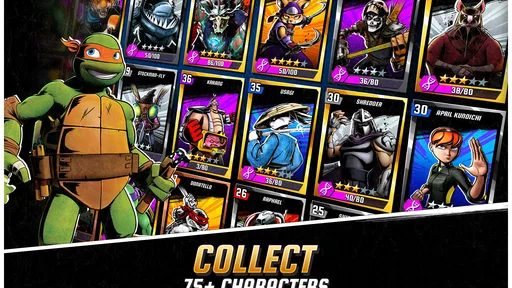
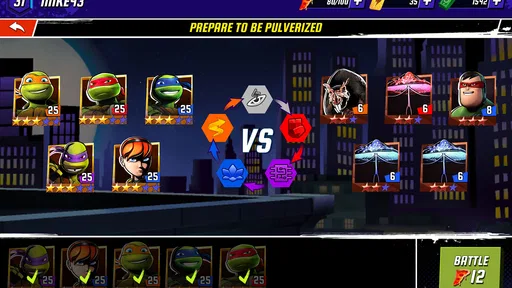
- Large roster lets you build teams with different combat roles.
- Story missions provide a clear progression path for new players.
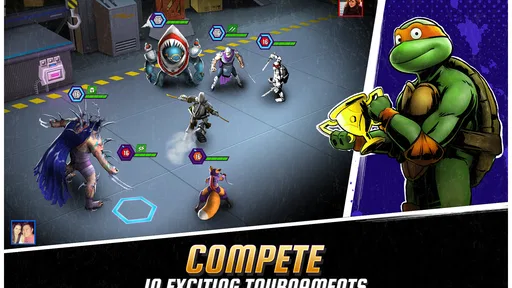
- Regular events add extra challenges and opportunities to earn rewards.
- Colorful graphics and lively animations suit younger and casual players.
Limitations of Ninja Turtles: Legends
- Energy limits can interrupt play sessions and encourage waiting or spending.
- Unlocking and upgrading top characters may require considerable grinding.
- Duplicate character cards can make roster progression feel slow.
- Some battles become repetitive after the initial story chapters.
- Online features and progress may depend on a stable internet connection.
Other Releases by Ludia Games Inc.
View All
Jurassic World™: The Game
Simulation4.3

Dragons: Rise of Berk
Simulation4.5

Jurassic World Alive
Role Playing4.2

Family Feud® Live!
Trivia3.4
Similar Picks in This Category
View All
Hair Dye
CrazyLabs LTD4.4

Monster High™ Beauty Salon
CrazyLabs LTD4.5

Bus Simulator - Bus Games 3D
Jima Apps4.4

Flight Pilot: 3D Simulator
Wildlife Studios4.1


Super Stylist Fashion Makeover
CrazyLabs LTD4.4
Frequently Asked Questions
What is Ninja Turtles: Legends about?
Ninja Turtles: Legends is a turn-based role-playing game based on the Teenage Mutant Ninja Turtles universe. You collect familiar heroes and villains, build a team, and fight through story missions, challenges, and special events. The game includes characters inspired by the animated series, each with different abilities, strengths, and roles in battle, so team selection matters as much as upgrading individual fighters.
Is Ninja Turtles: Legends free to download and play?
Yes, Ninja Turtles: Legends can be downloaded and played for free on supported Android and iOS devices. However, it uses optional in-app purchases for items such as premium currency, character resources, and progression boosts. You can advance without paying, but progress may become slower as missions get more difficult. Parents should review device purchase settings before allowing children to play.
Does the game require an internet connection?
An internet connection is generally required for Ninja Turtles: Legends, particularly for loading the game, synchronizing progress, accessing events, and using online features. Although some battles may feel like a single-player experience, the app is not designed as a fully offline game. A stable Wi-Fi or mobile data connection can also help prevent interruptions while rewards and progress are being saved.
How does combat work in Ninja Turtles: Legends?
Combat uses turn-based mechanics, allowing you to choose attacks and special abilities for each character when their turn arrives. Successful teams usually combine damage dealers, defensive characters, and fighters with healing or support skills. Matching character abilities to the enemy lineup is important, because simply using the strongest-looking characters may not always produce the best results in tougher stages.
Can I collect and upgrade different Ninja Turtles characters?
Yes, collecting and upgrading characters is one of the main features of Ninja Turtles: Legends. You can unlock heroes and villains, gather resources to improve their levels and abilities, and assemble different teams for specific battles. Some characters are easier to obtain than others, and developing a balanced roster is useful because certain missions, events, and opponents may favor particular abilities or team combinations.
Play our best games!


